Expert Urological Care & Minimally Invasive MIST Center in Seoul


Medical Guide
The Listen-First Consultation Model in Urology Care
Discover how the listen-first urology consultation model works: hearing your story, explaining every option clearly, and shared decision-making in Seoul.
Schedule a ConsultationThe Listen-First Consultation Model in Urology Care
Medically reviewed by Dr. Donghyun Lee, MOHW Board-Certified Urologist, Chief Director, Straight Urology Clinic
Urological symptoms are among the hardest for many people to talk about. Concerns involving the prostate, urinary function, kidney stones, or men's sexual health can feel private, embarrassing, or difficult to put into words. That discomfort has real consequences: people delay care, downplay their symptoms, or accept a treatment they never fully understood. A consultation model that begins with listening rather than prescribing is designed to counter exactly that problem. It gives you room to describe what is actually happening, in your own words, before any test is ordered or any treatment is proposed.
This article explains what a "listen-first, then explain" approach to a urology consultation looks like in practice, why it aligns with the principle of shared decision-making, and why it matters especially for international patients who are navigating an unfamiliar health system. Straight Urology Clinic, located near Ahyeon Station on Seoul Metro Line 2, describes this philosophy plainly: "We listen first, then explain. Before writing a prescription, we take time to hear each patient's story." The sections below unpack what that means and how you can evaluate whether any clinic genuinely practices it.
What "Listen-First" Actually Means
A listen-first consultation is not simply a doctor who is polite. It is a specific sequence: the clinician gathers your full history, your symptoms, your goals, and your worries before narrowing toward a diagnosis or a treatment recommendation. The order matters. When explanation and prescription come after listening, the plan is built around the patient in front of the doctor rather than around a generic template for a condition.
In urology this sequencing is particularly valuable because symptoms often overlap across very different conditions. Frequent urination, a weak stream, waking at night to urinate, or discomfort can point toward benign prostatic conditions, infection, bladder issues, stones, or other causes. A rushed consultation risks anchoring on the first plausible explanation. A listen-first consultation slows the opening minutes down so the clinician can capture the details, patterns, and timelines that separate one cause from another.
Dr. Donghyun Lee, the Chief Director of Straight Urology Clinic and a urologist board-certified by Korea's Ministry of Health and Welfare (MOHW), frames it this way: "I believe the first step in care is listening. I explain every option clearly." The emphasis on listening first and explaining clearly second is the core of the model. It does not promise any particular medical result. What it offers is a process in which you understand the reasoning before decisions are made.
Why Listening Comes Before Explaining
Listening first improves the raw material a clinician works with. Diagnostic accuracy depends heavily on history, and history depends on the patient feeling safe enough to be complete and honest. If someone is embarrassed and gives an abbreviated account, the clinician is reasoning from an incomplete picture. A consultation that opens with unhurried listening tends to surface the details people otherwise leave out.
There is also a sequencing logic to explanation. If a doctor explains options before understanding your situation and priorities, the explanation is generic. If the doctor listens first, the explanation can be tailored: which options are relevant to your anatomy and symptom pattern, which are not, and why. That is the difference between being handed a brochure and being walked through a decision that fits your circumstances.
Finally, listening first sets the tone for the rest of the relationship. It signals that the patient is a participant, not a passive recipient. That posture is the foundation for shared decision-making, discussed next.
Shared Decision-Making in Practice
Shared decision-making is a well-established concept in modern medicine. It describes a process in which the clinician contributes medical expertise and evidence, the patient contributes values, preferences, and life context, and the two reach a decision together. It is especially relevant when there is more than one reasonable option, which is common in urology.
Consider benign prostatic conditions. Depending on individual factors, reasonable paths can range from watchful waiting and lifestyle adjustment, to medication, to various minimally invasive or surgical procedures. None is automatically correct for everyone. The "best" choice depends on symptom severity, anatomy, other health conditions, tolerance for side effects, recovery expectations, and personal priorities. Shared decision-making is the mechanism for weighing those factors openly rather than defaulting to whatever the clinician happens to prefer.
A listen-first consultation feeds naturally into shared decision-making. Because the clinician has already heard your story and goals, the subsequent conversation about options is grounded in what matters to you. The clinician's job is to explain each option honestly, including its limitations and the fact that results vary between individuals, and then to help you choose. To learn more about how Straight Urology Clinic structures its consultations, you can review its main site at straighturology.com.
Explaining at the Patient's Level
Clear explanation is only clear if the patient understands it. Medical language is full of terms that mean little to someone outside the field, and a consultation loaded with jargon can leave a patient nodding without truly following. Explaining "at the patient's level" means translating findings and options into plain language, checking for understanding, and inviting questions.
Practically, patient-level explanation tends to include a few habits worth looking for in any clinic:
- Plain-language summaries. The clinician restates the diagnosis and the reasoning in ordinary words, not only in clinical terminology.
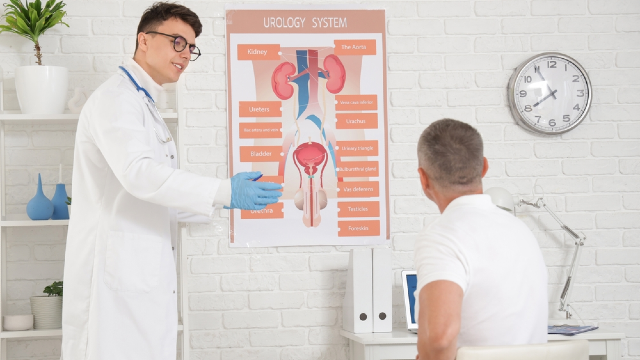
- Visual or written aids. Diagrams, imaging, or written notes help anchor an explanation that is otherwise easy to forget once you leave the room.
- Honest framing of uncertainty. Good explanations acknowledge what is known, what is uncertain, and that outcomes differ between people. Any clinician who guarantees a result is overstating what medicine can promise.
- Space for questions. You should be encouraged to ask, and to ask again if the first answer did not land.
Explaining before prescribing is the same discipline applied to treatment. Rather than handing over a prescription and a short instruction, the clinician explains what the medication or procedure is intended to do, what the alternatives are, and what to expect, so that any decision to proceed is an informed one.
Why This Matters for International Patients
For patients traveling from abroad, a listen-first, explain-clearly consultation carries extra weight. International patients face several layers of friction at once: an unfamiliar health system, potential language differences, limited time on the ground, and the practical reality that follow-up may involve travel. Each of these makes a clear, unhurried consultation more important, not less.
Language is the first factor. Straight Urology Clinic provides basic English-language support, including English consultations and basic English communication, with translated documents available; in-person consultations are conducted primarily in Korean. When a language layer is involved, a listen-first approach helps because it prioritizes fully understanding the patient's account before moving on, and a clear, patient-level explanation reduces the chance of a decision being made on a partial understanding. Confirming the exact language support you will have for your specific visit is a sensible step, and you can do that through the clinic's contact page.
Time is the second factor. A patient who has flown in has a compressed window and cannot easily return for a series of separate appointments. A consultation model that captures the full history early and explains options thoroughly in one sitting fits that reality better than a fragmented process. Straight Urology Clinic describes a one-stop, same-day model for consultation, examination, and diagnosis as a documented feature of how it operates; this describes the process, not any promised outcome.
Distance from routine follow-up is the third factor. When home is far away, understanding your options and your aftercare plan before you commit is essential, because you may not be able to drop by with a question next week. That is precisely where explaining clearly, at the patient's level, earns its value. If you are planning care from overseas, you can begin the conversation and ask about your specific situation through the clinic's contact page.
How to Recognize a Listen-First Consultation
You do not have to take a clinic's word for its philosophy. You can observe whether the behavior matches the description. In an initial consultation, watch for these signs:
- The clinician spends the opening minutes asking about your symptoms and history rather than moving immediately to a recommendation.
- You are able to describe your concerns without being interrupted or hurried.
- The diagnosis and reasoning are explained in language you understand, and you are invited to ask questions.
- Options are presented with honest limitations, including the acknowledgment that outcomes vary, rather than a single take-it-or-leave-it plan.
- The decision feels shared, with your priorities and preferences factored into the recommendation.
If a consultation moves straight to a prescription or procedure without exploring your history or explaining alternatives, that is a signal worth noting, regardless of what any marketing material claims. The value of a listen-first model lies in whether it is actually practiced in the room.
What This Model Does and Does Not Promise
It is worth being precise about the boundaries. A listen-first, explain-clearly consultation is a communication and decision-making process. It is designed to make you a better-informed participant in your own care and to help ensure that decisions reflect both the medical evidence and your personal circumstances. It is not, and cannot be, a promise of any particular medical outcome. No consultation style guarantees a cure, a specific recovery, or a result, and any suggestion otherwise should be treated with caution. What the model offers is clarity and partnership in the process, which is valuable in its own right and especially so when the stakes feel personal and the subject feels difficult to discuss.
Frequently Asked Questions
What does "listen-first, then explain" mean in a urology consultation?
It describes a sequence in which the clinician gathers your full history, symptoms, and goals before narrowing toward a diagnosis or recommending treatment. Explanation and any prescription come after listening, so the plan is built around your specific situation. Straight Urology Clinic describes its approach this way: "We listen first, then explain."
How is this different from a regular appointment?
The difference is mostly in sequencing and thoroughness. A listen-first consultation deliberately spends the opening minutes on your account before reasoning toward options, and it explains findings in plain language rather than moving straight to a prescription. The goal is a decision you understand and participate in, not a faster transaction.
What is shared decision-making?
Shared decision-making is a process in which the clinician provides medical expertise and evidence while you provide your values, preferences, and life context, and you reach a decision together. It is especially useful in urology, where several reasonable options often exist and the right choice depends on individual factors rather than a single universal answer.
Does a listen-first approach guarantee a better medical result?
No. It is a communication and decision-making process, not a promise of any outcome. Its value lies in helping you understand your options and participate in the decision. Results always vary between individuals, and no consultation style can guarantee a cure or a specific recovery.
Why does this model matter more for international patients?
International patients often face language differences, limited time on the ground, and follow-up that involves travel. A consultation that captures your full history early and explains options clearly in one sitting fits those constraints better than a fragmented process, and it helps you make an informed decision before committing from a distance.
What language support is available at Straight Urology Clinic?
The clinic provides basic English-language support, including English consultations and basic English communication, with translated documents available; in-person consultations are conducted primarily in Korean. Because arrangements can vary by visit, it is best to confirm the exact support for your specific appointment through the clinic's contact page before you travel.
How can I tell whether a clinic truly practices this?
Observe the consultation itself. Look for a clinician who asks about your history before recommending anything, explains the diagnosis in language you understand, presents options with honest limitations, and factors your priorities into the plan. Behavior in the room matters more than any philosophy printed in marketing material.
The Bottom Line
- A listen-first consultation gathers your full history, symptoms, and goals before any diagnosis or prescription, so the plan is tailored to you rather than to a generic template.
- Listening first supports shared decision-making, in which the clinician's evidence and your values combine to reach a decision together, which is especially useful when several reasonable options exist.
- Clear, patient-level explanation means findings and options are translated into plain language, with honest framing of uncertainty and space for questions.
- For international patients, this model helps offset language differences, limited time, and distant follow-up by producing an informed decision in fewer visits.
- The model is a process, not a promise; it improves clarity and partnership but cannot guarantee any medical outcome.
This article is for general education and is not a self-diagnosis tool. It does not replace an in-person evaluation by a qualified clinician. Urological symptoms can have many causes, and only a licensed urologist who examines you can diagnose your condition and advise on treatment. If you have symptoms or specific questions, speak with a qualified healthcare professional or contact Straight Urology Clinic directly.
More Articles
Continue reading clinical insights and recovery guides from Straight Urology Clinic.

Who Is a Candidate for REZUM Water Vapor Therapy
Learn who may be a candidate for REZUM Water Vapor Therapy, key eligibility factors, benefits, and what to expect. Explore your treatment options today.
Learn More

Why a Urologist's Case Volume Should Matter to You
Surgical case volume is linked to a urologist's experience but never guarantees your outcome. Learn to read reported urology procedure counts critically.
Learn More
What AUA Membership Means for Your Urologist Choice
Learn what American Urological Association Full Membership actually means, why it is not a board certification, and how to verify an overseas urologist.
Learn More