Expert Urological Care & Minimally Invasive MIST Center in Seoul


Medical Guide
Understanding UroLift Prostatic Lift
Understand UroLift Prostatic Lift, how it works, who may benefit, what to expect, and key recovery details. Learn more about this treatment option today.
Schedule a ConsultationWhat Is UroLift and How Does It Work?
UroLift, formally known as the prostatic urethral lift, is a minimally invasive surgical technique designed to relieve urethral compression caused by prostate enlargement — without removing, cutting, or heating prostate tissue. During the procedure, small permanent implants are placed to hold the enlarged prostate lobes apart, mechanically widening the urethral channel and improving urine flow.
Unlike medications, which work pharmacologically to relax prostate or bladder neck muscle (alpha-blockers) or gradually shrink the gland (5-alpha reductase inhibitors), UroLift addresses the physical obstruction directly and mechanically. And unlike more invasive procedures such as Transurethral Resection of the Prostate (TURP) or prostate enucleation, it does not involve tissue removal, which is one of the reasons it is generally associated with a faster return to normal activity and a lower likelihood of certain side effects, such as retrograde ejaculation.
UroLift is one of several Minimally Invasive Surgical Techniques (MIST) available for BPH, alongside options such as REZUM water vapor thermal therapy, iTind (a temporary implantable device), and ProGator, a next-generation prostate ligation system. Each of these techniques works through a different mechanism and is suited to different anatomical presentations, symptom profiles, and patient priorities — which is why technique selection is a clinical decision made after diagnostic evaluation, not a default choice.
Who Is a Suitable Candidate for UroLift?

Not every patient with BPH symptoms is an ideal candidate for UroLift. Suitability depends on several clinical factors that are assessed through a comprehensive urological evaluation, including:
Prostate size and shape. UroLift tends to be most effective for moderately enlarged prostates; very large glands (generally above certain volume thresholds) may be better suited to other techniques, such as prostate enucleation.
Presence or absence of a median lobe. The anatomical configuration of the prostate — particularly whether the middle lobe protrudes into the bladder neck — can influence which MIST option is most appropriate and how implants are placed.
Overall symptom severity and impact on quality of life, as measured through standardized urinary symptom assessments such as the IPSS, together with uroflowmetry results.
Patient priorities, including interest in preserving ejaculatory function, which UroLift is designed to support in many cases, and a preference to avoid more invasive surgery or general anesthesia.
Absence of certain contraindications, such as an active urinary tract infection, certain bladder conditions, or prostate cancer that has not been ruled out through appropriate screening.
At Straight Urology Clinic, candidacy is determined only after a thorough diagnostic workup rather than a symptom-based assumption, reflecting the clinic's broader philosophy of accurate diagnosis before treatment. Patients who are not suitable candidates for UroLift are not simply excluded from care — they are guided toward the MIST option, or in some cases the same-day enucleation procedure, that better matches their anatomy.
The Diagnostic and Procedure Process
Before any treatment recommendation is made, patients at Straight Urology Clinic undergo a multi-faceted evaluation comparable to university hospital standards. This evaluation serves two purposes: confirming that BPH — rather than another condition with overlapping symptoms — is the underlying cause, and determining which treatment option, if any, is best suited to the patient's anatomy.
Diagnostic Evaluation
Ultrasound imaging of the prostate, bladder, and related structures to assess gland size, shape, and any anatomical abnormalities.
Cystoscopy to directly visualize the urethra and bladder neck, assessing the degree of compression and checking for median lobe enlargement.
Uroflowmetry and post-void residual (PVR) testing to objectively measure urine flow rate and how completely the bladder empties, providing a functional counterpart to the anatomical picture from imaging.
Blood testing, including PSA (Prostate-Specific Antigen) analysis, along with urinalysis, to screen for other conditions and establish a baseline before treatment.
This layered approach — combining imaging, direct visualization, functional testing, and laboratory work — allows the care team to build a complete clinical picture rather than relying on any single test in isolation.
The UroLift Procedure
Once a patient is confirmed as a suitable candidate, the UroLift procedure itself is typically performed as an outpatient treatment, often completed within a relatively short appointment window. Using a specialized delivery system inserted through the urethra under direct visualization, the physician places a series of small implants that gently retract the enlarged prostate tissue away from the urinary channel. The number and placement of implants is individualized based on the patient's specific anatomy, as identified during the earlier cystoscopy and imaging.
Because the procedure does not involve incisions on the skin, tissue removal, or the use of heat or lasers on prostate tissue, it is generally associated with less intraoperative bleeding, a shorter procedural time, and a more comfortable recovery compared with conventional surgical approaches to BPH.
Doctor's Expertise
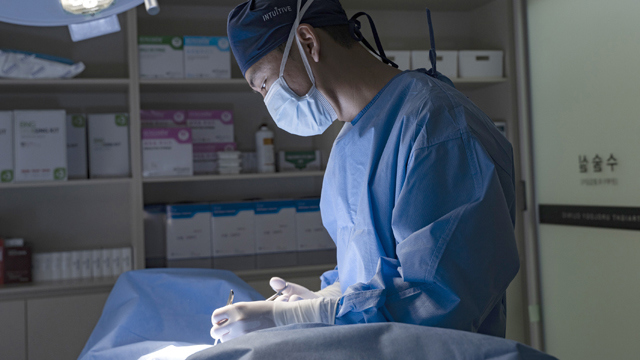
The UroLift procedure at Straight Urology Clinic is performed under the direction of Dr. Dong-hyun Lee, Chief Director of the clinic. Dr. Lee, who was educated abroad and provides direct English-language consultation without the need for interpretation, brings extensive hands-on experience across multiple MIST techniques for BPH, including UroLift, REZUM, iTind, and ProGator. This breadth of experience allows treatment planning to be tailored to each patient's specific anatomy, symptom pattern, and personal goals, rather than defaulting to a single standardized approach regardless of individual presentation.
For international patients in particular, the ability to discuss symptoms, diagnostic findings, and treatment trade-offs directly in English — without relying on a translator — can make it easier to ask detailed questions and fully understand the reasoning behind a given treatment recommendation before deciding to proceed.
Why Choose Straight Urology Clinic
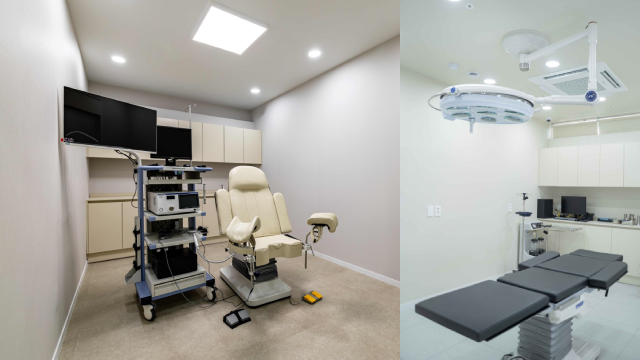
Straight Urology Clinic, located just steps from Ahyeon Station (Line 2) with convenient access to Seoul Station and the Incheon Airport Railroad, was founded with a clear focus on prostate, voiding disorder, and female urological health. The clinic's approach centers on three principles: listening carefully to understand each patient's actual experience, building treatment plans around evidence-based diagnosis rather than surface symptoms, and communicating results and options in plain, understandable language.
The facility itself spans approximately 396 square meters (120 pyeong) and includes a Ministry of Health and Welfare–certified operating room, a dedicated diagnostic suite for imaging and functional testing, and three patient beds, including a private recovery area supporting same-day outpatient procedures. This scale is intentional — designed to support personalized, attentive care rather than high-volume treatment, and to allow enough time in each consultation for patients to fully understand their diagnosis and options.
The clinic's treatment philosophy also emphasizes restraint: rather than defaulting to the most invasive option available, non-surgical or minimally invasive management is prioritized whenever clinically appropriate, while surgical capability remains available for patients who need it.
Recovery, Safety, and Realistic Outcomes

Recovery from UroLift is generally shorter than recovery from traditional prostate surgery, and many patients are able to return to normal daily activities within a few days, though individual timelines vary based on prostate anatomy, implant number, and overall health. Because catheterization after UroLift is often brief or, in some cases, unnecessary, many patients experience less disruption to daily routines compared with recovery from more invasive procedures.
As with any medical procedure, some temporary side effects can occur in the days following treatment. These may include mild urinary discomfort or burning, urgency, blood in the urine, or a temporary worsening of symptoms before improvement sets in as the tissue around the implants heals. Such effects are generally self-limited and resolve without additional intervention, though patients are advised to report any symptoms that are severe or do not improve as expected.
It is important to approach outcomes realistically. While UroLift can meaningfully improve urinary flow and reduce bothersome symptoms for appropriately selected candidates, it is not the right option for every patient, and results depend heavily on accurate pre-procedure assessment of prostate anatomy and symptom pattern. Some patients may find that improvement, while noticeable, does not fully eliminate every urinary symptom, particularly if bladder function has already been affected by long-standing obstruction. This is why the clinic emphasizes long-term management and follow-up rather than treating any single procedure as an isolated event.
Frequently Asked Questions
Is UroLift permanent? The implants are designed to remain in place long-term, though individual anatomy and disease progression can affect how durable symptom relief is over time. Ongoing follow-up allows the care team to monitor results and address any changes.
Does UroLift affect sexual function? Because UroLift does not remove prostate tissue, it is generally associated with a lower likelihood of retrograde ejaculation compared with more invasive procedures such as TURP. Individual experiences vary and should be discussed directly with the treating physician.
How is UroLift different from medication? BPH medications work pharmacologically — relaxing muscle tissue or gradually shrinking the prostate — and typically require continuous use. UroLift instead addresses the physical obstruction directly through a one-time procedure, which may appeal to patients who prefer not to rely on daily medication or who have not responded well to it.
A Precise First Step
For men exploring treatment options for BPH, understanding whether UroLift — or another minimally invasive technique — fits their specific anatomy and goals begins with a proper diagnostic evaluation rather than an assumption based on symptoms alone. At Straight Urology Clinic, that evaluation, combined with Dr. Dong-hyun Lee's experience across multiple MIST options and a clinic environment built for attentive, individualized care, forms the foundation for an honest, evidence-based approach to prostate health.
More Articles
Continue reading clinical insights and recovery guides from Straight Urology Clinic.
Who Is a Candidate for REZUM Water Vapor Therapy
Learn who may be a candidate for REZUM Water Vapor Therapy, key eligibility factors, benefits, and what to expect. Explore your treatment options today.
Learn More
Why a Urologist's Case Volume Should Matter to You
Surgical case volume is linked to a urologist's experience but never guarantees your outcome. Learn to read reported urology procedure counts critically.
Learn More
What AUA Membership Means for Your Urologist Choice
Learn what American Urological Association Full Membership actually means, why it is not a board certification, and how to verify an overseas urologist.
Learn More