Expert Urological Care & Minimally Invasive MIST Center in Seoul


Medical Guide
Who Is a Candidate for REZUM Water Vapor Therapy
Learn who may be a candidate for REZUM Water Vapor Therapy, key eligibility factors, benefits, and what to expect. Explore your treatment options today.
Schedule a ConsultationWhat Is REZUM Water Vapor Therapy?
REZUM is a minimally invasive surgical technique (MIST) for BPH that uses targeted water vapor (steam) to reduce excess prostate tissue. During the procedure, a small device delivers controlled bursts of thermal energy in the form of water vapor directly into the enlarged prostate tissue. As the vapor releases its stored energy, it causes the treated cells to break down; over the following weeks, the body naturally reabsorbs this tissue through its own healing response, and the prostate gradually shrinks — relieving pressure on the urethra and improving urine flow.
What distinguishes REZUM from many other energy-based treatments is its selectivity. Because water vapor travels efficiently through soft prostate tissue but disperses at natural anatomical boundaries, the thermal effect is generally confined to the targeted area rather than spreading broadly into surrounding structures — part of the rationale for its use in men who want to limit the treatment's impact on nearby nerves and muscles involved in sexual and urinary function.
Unlike traditional open or resection-based prostate surgery, REZUM does not require cutting or removal of tissue during the procedure itself; the tissue reduction happens gradually as the body processes the treated area over subsequent weeks. This is part of why it is grouped among the newer generation of minimally invasive BPH treatments, alongside options such as UroLift, iTind, and ProGator — each working through a different mechanism (mechanical lifting, temporary scaffolding, ligation, or thermal ablation) to relieve obstruction while reducing surgical trauma and recovery time compared with more invasive approaches. Matching the right technology to the right patient anatomy is therefore a central part of pre-treatment evaluation rather than an afterthought.
Who Is a Good Candidate for REZUM?

Not every patient with BPH symptoms is automatically a candidate for REZUM, and determining suitability requires a proper diagnostic workup rather than symptoms alone. In general, candidates for REZUM tend to be men who:
Have been diagnosed with BPH through objective testing, not just self-reported symptoms
Experience moderate to bothersome LUTS that affect daily life or sleep
Have a prostate size within the range considered appropriate for vapor therapy (larger glands may be better suited to other approaches, such as enucleation)
Want to preserve sexual function, as REZUM is generally associated with a lower impact on ejaculatory function compared to some traditional surgical options
Prefer to avoid or postpone more invasive surgery, or have not achieved adequate symptom control with medication alone
Are in stable general health and cleared for a same-day outpatient procedure
Men with a very significantly enlarged prostate — generally cited around 80cc or greater — may not be ideal candidates for minimally invasive options like REZUM, and same-day surgical enucleation may instead be the more appropriate path. This is precisely why individualized evaluation matters more than treatment popularity.
Who may be less suited to REZUM. Suitability is also about ruling things out. Men with an active urinary tract infection, certain anatomical variations of the prostate, or a diagnosis requiring further oncologic workup typically need those issues addressed or clarified before any minimally invasive procedure is considered. Those who have already progressed to more severe complications — such as recurrent acute urinary retention or significant bladder dysfunction — may need a broader conversation about surgical options rather than a vapor-based approach alone. None of these determinations can be made reliably without the diagnostic testing described below, which is why candidacy is always assessed case-by-case rather than assumed from a symptom description alone.
How Suitability Is Determined: The Diagnostic Process
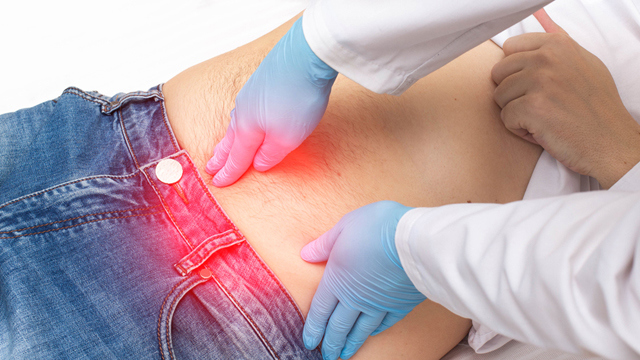
At Straight Urology Clinic, candidacy for REZUM is assessed through a multi-faceted diagnostic process rather than a quick consultation. This typically includes:
Ultrasound imaging of the prostate and bladder to assess size and structural characteristics
Uroflowmetry to measure the actual strength and pattern of urine flow
Post-void residual (PVR) testing to determine how much urine remains in the bladder after voiding
Cystoscopy, when needed, to directly assess urethral compression and any median lobe enlargement
PSA blood testing and urinalysis to rule out other contributing conditions
This structured evaluation allows the clinical team to distinguish between cases suited to REZUM, other MIST options, or same-day enucleation — rather than defaulting to one treatment for every patient.
Each test contributes a different piece of the picture. Ultrasound establishes the physical size and shape of the prostate, including whether there is a median lobe extending into the bladder neck, which can influence which minimally invasive technique is most effective. Uroflowmetry and PVR testing translate the anatomical findings into functional terms — how much the obstruction is actually affecting the patient's ability to empty the bladder — while cystoscopy allows direct visual confirmation of the degree of urethral compression in cases where imaging alone leaves questions unanswered. PSA testing and urinalysis, meanwhile, help rule out other contributing or coexisting conditions before a treatment plan is finalized. Reviewing these results together — rather than any single test in isolation — is what allows a recommendation to be tailored rather than generic.
What Happens During and After the Procedure
REZUM is typically performed as an outpatient procedure. After appropriate anesthesia or sedation is administered for comfort, the physician uses a specialized device inserted through the urethra to deliver the water vapor treatment to the targeted areas of prostate tissue, guided by direct visualization to ensure the energy is applied precisely where it is needed. The procedure itself is usually brief, and because no external incision is required, most patients are able to leave the same day rather than requiring an extended inpatient stay.
Recovery is a gradual process, and understanding this timeline in advance helps prevent unnecessary concern. Many patients notice some urinary symptoms — including temporary urgency, frequency, mild burning, or minor blood in the urine — in the days to weeks following treatment, as the treated tissue is broken down and absorbed by the body. A temporary urinary catheter may be used for a short period after the procedure while post-treatment swelling subsides, which is a normal and expected part of the healing process rather than a complication.
Meaningful symptom improvement generally develops over the following weeks to months as swelling resolves and the prostate volume decreases. It is common for symptoms to fluctuate during this window before steadily improving, rather than resolving in a straight line. Patients are typically guided through this recovery window with clear expectations set in advance — including which symptoms are expected and temporary, and which would warrant contacting the clinic — rather than being left to interpret normal post-procedure changes on their own.
As with any medical treatment, individual outcomes vary based on prostate size, symptom severity, and overall health, and REZUM is not guaranteed to eliminate all BPH symptoms permanently or to work equally well for every patient. Some men may require additional treatment later if symptoms recur or if the prostate continues to enlarge over time. Ongoing follow-up — including repeat symptom assessment and, when appropriate, follow-up uroflowmetry — allows the care team to monitor progress objectively and address any recurrence of symptoms over time, rather than relying solely on the patient's subjective sense of improvement.
Dr. Lee Dong-hyun's Approach to BPH Treatment

At Straight Urology Clinic, treatment decisions are led by Dr. Lee Dong-hyun, Chief Director, who was educated abroad and provides full medical consultations directly in English without the need for an interpreter — a particular benefit for international patients navigating a diagnosis in a foreign country, where language barriers can otherwise make it difficult to ask detailed follow-up questions or fully understand treatment trade-offs.
Dr. Lee brings hands-on experience across multiple minimally invasive BPH techniques, including REZUM, UroLift, iTind, and ProGator, which allows treatment planning to be tailored to each patient's anatomy, symptom severity, and personal goals rather than a one-size-fits-all protocol. Because these techniques differ meaningfully in mechanism and ideal use case, having direct experience across several of them — rather than offering only one — means the recommendation a patient receives is driven by clinical fit rather than by which single device the clinic happens to offer. For patients with more significantly enlarged prostates who are not well suited to any MIST option, Dr. Lee also performs same-day Prostate Enucleation (TUEB), allowing continuity of care even when a patient's anatomy calls for a different surgical approach than initially expected.
Why Location and Facility Design Matter
Straight Urology Clinic is located on the 5th floor of Ahyeon Medical Building in Bukahyeon-dong, Seodaemun-gu, Seoul, just steps from Ahyeon Station on Subway Line 2, with practical access to Seoul Station, the Incheon Airport Railroad, and KTX lines — a relevant consideration for patients traveling from outside the immediate area, including those coming from other regions of Korea or from abroad specifically for treatment.
The clinic operates a Ministry of Health and Welfare–certified operating room within a facility deliberately sized for personalized care rather than high patient volume. The approximately 396 m² (120-pyeong) space includes a dedicated diagnostic suite equipped for ultrasound, cystoscopy, uroflowmetry, and laboratory testing, along with three patient beds — including a private recovery area that supports same-day outpatient procedures such as REZUM. This layout is intended to allow diagnosis, consultation, and same-day treatment to happen within a single, coordinated visit whenever clinically appropriate, which can be a meaningful practical advantage for patients balancing treatment with travel or limited time away from work.
A Careful First Step
Deciding whether REZUM — or any BPH treatment — is right for you starts with an accurate diagnosis, not an assumption based on symptoms alone. Patients considering treatment for an enlarged prostate are encouraged to seek a thorough evaluation that considers prostate size, symptom pattern, and personal priorities such as preserving sexual function or avoiding more invasive surgery. A clear, honest conversation with a physician remains the most reliable starting point toward the right treatment decision.
Frequently Asked Questions
Is REZUM painful?
Most patients tolerate the procedure well with appropriate anesthesia or sedation, and it is generally performed without the need for a hospital stay. Some temporary discomfort during recovery, such as urgency or mild burning, is normal and expected.
How soon will symptoms improve after REZUM?
Improvement is gradual rather than immediate, typically unfolding over several weeks to a few months as the treated tissue is absorbed and swelling resolves.
Can REZUM be repeated if symptoms return later?
In some cases, further treatment may be considered if BPH symptoms recur or progress over time; this is determined based on follow-up evaluation rather than assumed in advance.
Does REZUM affect sexual function?
REZUM is generally associated with a lower likelihood of affecting ejaculatory function compared to some traditional surgical approaches, though individual results can vary and should be discussed directly with a physician.
Ultimately, the right treatment for BPH is the one that matches an individual patient's anatomy, symptom severity, and personal goals — not the treatment that is most commonly advertised. Patients are encouraged to ask direct questions about why a particular option is or is not being recommended for their specific case.
More Articles
Continue reading clinical insights and recovery guides from Straight Urology Clinic.
Who Is a Candidate for REZUM Water Vapor Therapy
Learn who may be a candidate for REZUM Water Vapor Therapy, key eligibility factors, benefits, and what to expect. Explore your treatment options today.
Learn More

Why a Urologist's Case Volume Should Matter to You
Surgical case volume is linked to a urologist's experience but never guarantees your outcome. Learn to read reported urology procedure counts critically.
Learn More
What AUA Membership Means for Your Urologist Choice
Learn what American Urological Association Full Membership actually means, why it is not a board certification, and how to verify an overseas urologist.
Learn More