Personalized Medical Care & Dedicated International Patient Concierge

Urinary Stone Treatment
Kidney Stone & Urinary Stone Treatment
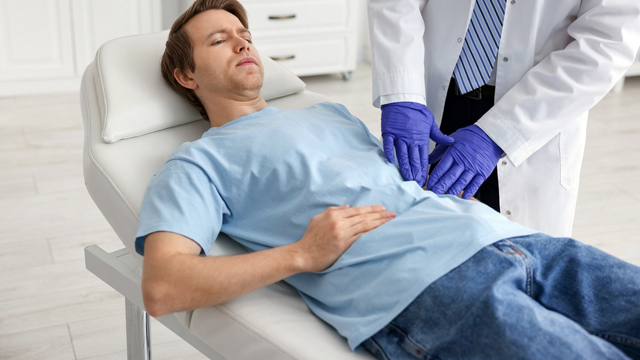
Kidney stone and urinary stone treatment refers to the structured process of identifying a urinary stone, assessing its characteristics, and selecting the management approach best suited to that stone and that patient.
Schedule a ConsultationKidney Stone & Urinary Stone Treatment
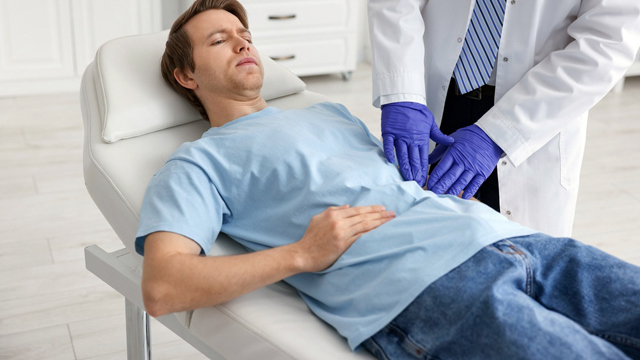
Medically reviewed by Donghyun Lee, MD, Board-Certified Urologist (Korea Ministry of Health and Welfare)
Kidney stone and urinary stone treatment is the diagnosis and management of hardened mineral deposits that form inside the urinary tract, matched to a treatment path based on the stone's size, location, and symptoms. Some small stones are simply observed to see if they pass naturally, while others require a procedure such as shock wave lithotripsy or endoscopic removal. At Straight Urology Clinic in Seoul, this process starts with accurate diagnosis so that international patients understand their options before deciding on a treatment plan.
Urinary stones form when minerals and waste products in urine become concentrated and harden inside the urinary tract. Patients from the United States and other countries often reach out because sudden flank pain, blood in the urine, or difficulty urinating raises concern, and they want a clear, English-supported explanation of what is happening and what can be done. Many international patients also want to understand who will actually perform their evaluation, how experienced that physician is, and how a Korean urology clinic's approach compares with what they could expect at home before committing to travel. This page explains how urinary stones are evaluated at Straight Urology Clinic and how a treatment path is chosen — the two main procedure types, extracorporeal shock wave lithotripsy (ESWL) and endoscopic stone removal, are each covered in their own dedicated pages linked below, so this overview focuses on the triage process that connects diagnosis to the right treatment.
What Is Kidney Stone & Urinary Stone Treatment?
Kidney stone and urinary stone treatment refers to the structured process of identifying a urinary stone, assessing its characteristics, and selecting the management approach best suited to that stone and that patient — ranging from monitoring alone to active stone removal. Rather than a single fixed procedure, it is best understood as a decision pathway: diagnosis first, then a matched treatment.
Stones can form anywhere in the urinary tract, including the kidney, ureter, or bladder.
Diagnosis considers the stone's location and size, the likelihood of natural passage, the pain pattern, whether infection is present, and whether the stone is causing urinary obstruction.
Treatment options range from observation of suitable small stones to shock-wave treatment or endoscopic stone removal.
The clinic describes ESWL as a non-invasive method using shock waves to break stones, ureteroscopy (URS) as direct endoscopic stone removal, and flexible renal endoscopy (RIRS) as removal through a flexible endoscope without a skin incision.
The goal of treatment is to relieve symptoms and either allow the stone to pass or remove/fragment it, depending on its characteristics.
Straight Urology Clinic describes its approach as a one-stop system, meaning consultation, testing, procedures, and surgery are coordinated in one place according to the stone's characteristics rather than a single fixed protocol.
Who Performs Kidney Stone & Urinary Stone Treatment at Straight Urology Clinic
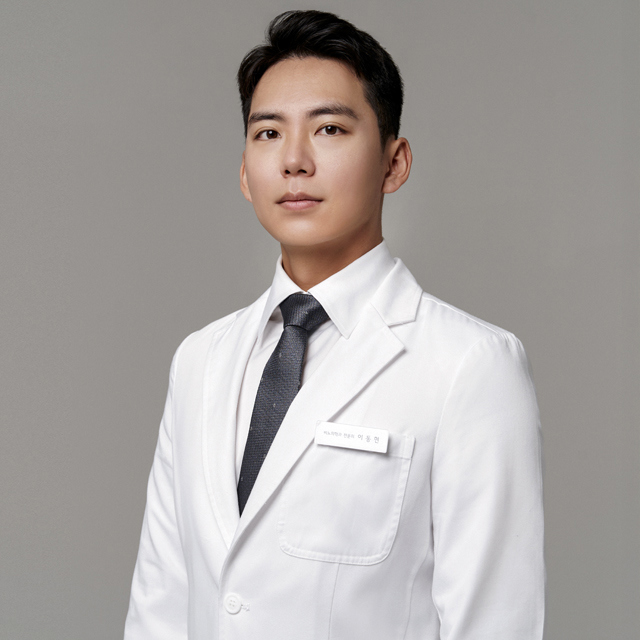
Dr. Donghyun Lee, MD
Board-certified Urologist
All urinary stone diagnosis and treatment at Straight Urology Clinic is personally overseen by Dr. Donghyun Lee, MD, the clinic's Chief Director and sole treating urologist. Dr. Lee is a board-certified urologist certified by Korea's Ministry of Health and Welfare, and he is a full member of both the American Urological Association (AUA) and the European Association of Urology (EAU). His procedure volume includes more than 500 urinary stone surgeries among a broader total of over 1,500 urological procedures and surgeries. Dr. Lee completed his residency in urology at Korea University Guro Hospital and later served as Chief of the Department of Urology at the Armed Forces Capital Hospital, where he also collaborated clinically with the urology departments of Seoul National University Hospital and Seoul St. Mary's Hospital. He graduated from Vanderbilt University before completing his medical degree at Korea University College of Medicine and doctoral coursework in urology at the same institution, and he presented at the 2018 European Association of Urology Annual Congress in Barcelona. Dr. Lee describes his approach simply: "I believe the first step in care is listening. I take time to understand each patient before recommending treatment, and I explain every option clearly." Because Straight Urology Clinic operates with a single treating physician, patients see the same doctor from consultation through any procedure and follow-up, rather than being handed between different specialists at different stages of care.
Kidney Stone & Urinary Stone Treatment Options
Once a stone is diagnosed, Dr. Lee selects a treatment path from among the following approaches, based on the stone's location, size, symptoms, infection status, and obstruction. There is no single "best" treatment for every stone — the choice depends mainly on stone size, location, density, whether infection or obstruction is present, and whether the stone has a realistic chance of passing on its own.
Approach | What it involves | Typically considered when |
|---|---|---|
Observation | Monitoring a stone without an active procedure, often with hydration guidance | The stone is small and considered likely to pass naturally, with no infection or obstruction |
Extracorporeal Shock Wave Lithotripsy (ESWL) | Shock waves delivered from outside the body fragment the stone into pieces that can pass naturally | The stone's size and location are considered suitable for a non-invasive, non-endoscopic approach |
Ureteroscopic Stone Removal (URS) | A thin scope is passed through the urinary tract to directly view, break up, and/or remove the stone | The stone is in the ureter and unlikely to pass, or has not responded to less invasive treatment |
Flexible Renal Endoscopy (RIRS) | A flexible endoscope reaches kidney stones through the urinary tract without a skin incision | The stone is located in the kidney and difficult to reach with rigid instruments |
Percutaneous Stone Removal | A dedicated approach for select stones, using imaging-guided access | The clinic determines this approach is appropriate based on stone characteristics |
ESWL is generally considered when a stone is suitable for a non-invasive, non-endoscopic approach, while endoscopic options such as URS and RIRS are generally considered when a stone is unlikely to pass on its own, is causing persistent pain or obstruction, or has not responded to a less invasive treatment already tried. For a deeper look at how the two most common active treatments work, see the dedicated pages covering Shock Wave Lithotripsy (ESWL) and Endoscopic (Surgical) Stone Removal in more detail, both listed under Urinary Stone Treatment. Whichever path applies, it is planned and explained directly by Dr. Lee during consultation rather than assigned automatically, and patients are encouraged to ask about the reasoning behind the recommendation before agreeing to proceed.
Who Is a Good Candidate
Patients with suspected or diagnosed kidney or urinary stones who have symptoms such as sudden severe flank or back pain.
Patients whose pain spreads to the lower abdomen or groin.
Patients with blood in the urine or painful urination.
Patients experiencing difficulty passing urine, nausea, or vomiting.
Patients whose treatment path will be determined according to stone size, location, symptoms, obstruction, infection status, and the likelihood of natural passage.
Patients who can safely pass a small stone naturally may not need active treatment, and their suitability for observation is determined by the treating doctor.
Patients with an active infection or another urinary condition may need that issue addressed first, before stone-specific treatment is planned.
What to Expect: Procedure, Recovery, Results Timeline
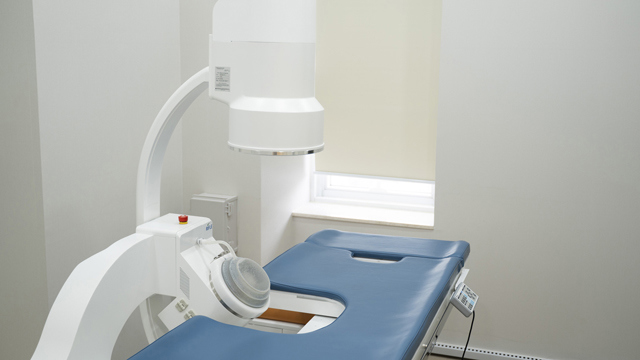
Evaluation begins with a review of symptoms and imaging to determine the stone's location and size. The doctor then assesses whether the stone is likely to pass naturally, whether infection is present, and whether there is urinary obstruction. Preparation before any procedure typically involves reviewing prior imaging, assessing current medications, and following instructions on food, fluids, and medication specific to the treatment planned. Based on this evaluation, treatment may range from observation to shock-wave treatment or endoscopic stone removal. The anesthesia or pain-control approach depends on which treatment is selected. Recovery time varies depending on whether observation, ESWL, or an endoscopic procedure is used, with less invasive approaches generally involving a shorter recovery than surgical removal. Aftercare may include hydration guidance and follow-up appointments, with specifics depending on the treatment chosen. Results depend on whether the stone passes naturally, is fragmented, or is removed endoscopically, and confirming complete stone clearance can require follow-up imaging in some cases. Future stone risk depends on individual factors, and longer-term prevention is discussed as part of follow-up care.
For international patients, planning around recovery and travel is part of the overall timeline. Fitness to fly is decided based on recovery, symptoms, the treatment type used, and clearance from the treating doctor, so this is confirmed individually rather than following a fixed number of days. Patients are also generally advised to allow additional recovery time before a long-haul return flight and to keep in mind that follow-up needs can vary depending on whether any stone fragments remain.
Stage | What generally happens |
|---|---|
Consultation & diagnosis | Symptom review, imaging, and assessment of stone size, location, infection, and obstruction |
Treatment selection | Observation, ESWL, URS, RIRS, or percutaneous removal chosen based on stone characteristics |
Procedure (if needed) | Anesthesia or pain control appropriate to the selected procedure |
Early recovery | Duration varies by procedure; less invasive approaches generally involve less downtime |
Results & follow-up | Confirmed through symptom resolution and, when clinically needed, follow-up imaging |
Combining with Other Treatments
Additional stone treatment may sometimes be required if an initial approach does not fully clear the stone, for example if fragments remain after ESWL or if a stone proves more complex than expected once treatment begins. Whether combination or staged treatment applies to a specific case is determined individually by Dr. Lee, based on how the stone responds and what follow-up imaging shows. Patients are informed of this possibility during consultation so that expectations are realistic from the outset.
Safety, Precision, Clinic Standards
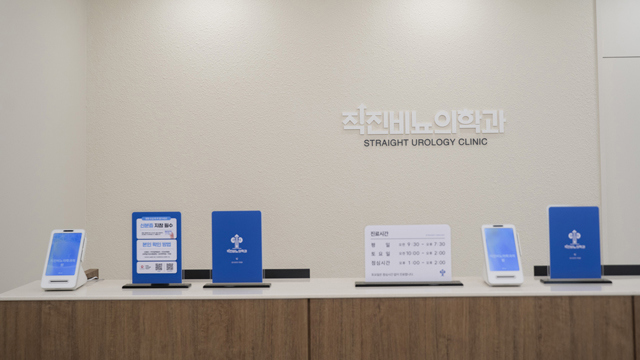
Treatment selection is based on the stone's location, size, symptoms, infection status, obstruction, and the likelihood of natural passage rather than a single default approach. Straight Urology Clinic is a registered medical institution for attracting foreign patients, certified by Korea's Ministry of Health and Welfare in compliance with the Medical Overseas Expansion and Foreign Patients Attraction Act. Dr. Lee's board certification is issued by the same Ministry. Dr. Lee is a full member of the American Urological Association (AUA) and the European Association of Urology (EAU), two of the leading international professional bodies in the field. The American Urological Association publishes the Surgical Management of Kidney and Ureteral Stones guideline, which frames treatment selection around patient factors, stone characteristics, and shared decision-making — an approach consistent with the clinic's individualized process (American Urological Association, 2025/2026). The European Association of Urology similarly maintains a dedicated Urolithiasis guideline used by urologists internationally to guide diagnosis and treatment decisions (European Association of Urology, 2024/2025). The clinic's one-stop system is designed to keep consultation, testing, and treatment planning under a single treating physician rather than splitting a patient's care across multiple providers. Risks vary by the treatment method ultimately selected and by individual patient condition, and these are reviewed with the patient before any procedure is scheduled.
The Bottom Line
Kidney and urinary stone treatment starts with accurate diagnosis of the stone's size, location, and related symptoms.
Treatment is matched to the individual stone rather than applied the same way to every patient.
Options range from observation to ESWL to endoscopic removal (URS/RIRS), each covered in more depth on its own page.
Dr. Donghyun Lee, MD personally oversees diagnosis and treatment, drawing on over 500 urinary stone surgeries.
A consultation is the next step to determine which path applies to a specific case.
Frequently Asked Questions
How do I know if I actually need treatment for a urinary stone? Whether treatment is needed depends on the stone's size, location, symptoms, whether it is causing obstruction, and its likelihood of passing naturally. A clinical evaluation, including imaging, is required to determine this for an individual case rather than relying on symptoms alone.
What symptoms mean I should see a urologist about a possible urinary stone? Sudden severe flank or back pain, pain spreading to the lower abdomen or groin, blood in the urine, painful urination, difficulty passing urine, nausea, or vomiting are all reasons to seek evaluation. These symptoms can also overlap with other conditions, which is part of why an accurate diagnosis matters.
Is urinary stone treatment in Korea performed to international standards? Straight Urology Clinic is a Ministry of Health and Welfare-certified institution registered for foreign patient care, and Dr. Lee is a full member of both the AUA and the EAU. These affiliations reflect ongoing engagement with international urological standards and guideline development.
How is the right treatment approach chosen between observation, ESWL, and endoscopic removal? The decision is based mainly on stone size, location, density, whether infection or obstruction is present, and whether the stone is likely to pass naturally. This is assessed individually during consultation rather than by applying a fixed rule to every patient.
Will I need a stent after treatment? A ureteral stent may sometimes be required depending on the treatment performed and the individual case. This possibility, along with expected stent duration, should be discussed directly with the treating doctor before the procedure.
Can urinary stones come back after treatment? Future stone formation can depend on individual risk factors such as diet, hydration, and underlying metabolic conditions. Long-term prevention involves evaluating the underlying cause together with the treating doctor after the current stone has been managed.
Will the doctor speak English during my consultation? Language support is available for consultations at Straight Urology Clinic, and Dr. Lee is the physician who conducts the consultation directly.
Is an online consultation possible before traveling to Korea? Yes, online consultation is available before an in-person visit is arranged, which allows patients to ask questions and discuss their symptoms before committing to travel.
Book a Consultation at Straight Urology Clinic
If you are experiencing symptoms of a possible kidney or urinary stone, or want a second opinion on a diagnosed stone, Dr. Donghyun Lee, MD and the team at Straight Urology Clinic in Seoul can evaluate your case and explain the treatment options that may apply. An initial online consultation can help clarify next steps before you travel, and any in-person visit, testing, and treatment planning can then be coordinated through the clinic's one-stop system. Learn more about Dr. Lee's background and experience or contact the clinic to arrange a consultation about kidney or urinary stone treatment in Seoul.
Disclaimer
This content is provided for general informational purposes only and is not medical advice. Treatment eligibility is determined only after an individual consultation and clinical evaluation by a qualified physician at Straight Urology Clinic. Treatment outcomes vary between patients.
Sources & Further Reading
American Urological Association. "Surgical Management of Kidney and Ureteral Stones" Guideline. https://www.auanet.org/guidelines-and-quality/guidelines/surgical-management-of-kidney-and-ureteral-stones
European Association of Urology. "EAU Guidelines on Urolithiasis." Uroweb. https://uroweb.org/guidelines/urolithiasis
National Institute of Diabetes and Digestive and Kidney Diseases (NIDDK). "Treatment for Kidney Stones." https://www.niddk.nih.gov/health-information/urologic-diseases/kidney-stones/treatment
Umbrella review: "Urolithiasis management: An umbrella review on the efficacy and safety of extracorporeal shock wave lithotripsy (ESWL) versus the ureteroscopic approach." PubMed. https://pubmed.ncbi.nlm.nih.gov/39840617/
Other Services
Explore additional treatments offered by our specialists.
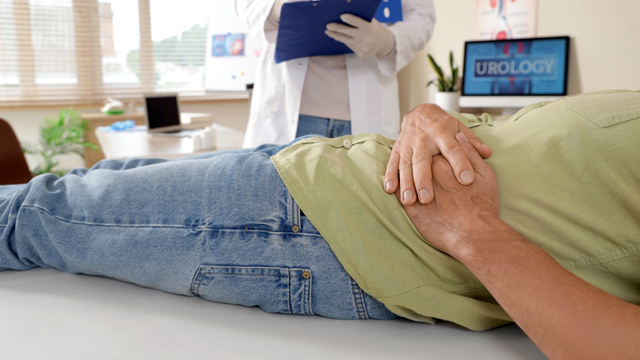
UroLift Prostatic Lift
UroLift Prostatic Lift is an FDA-cleared, minimally invasive procedure that uses small implants to retract and hold enlarged prostate tissue away from the urethra, improving urinary flow without removing prostate tissue.
Learn More
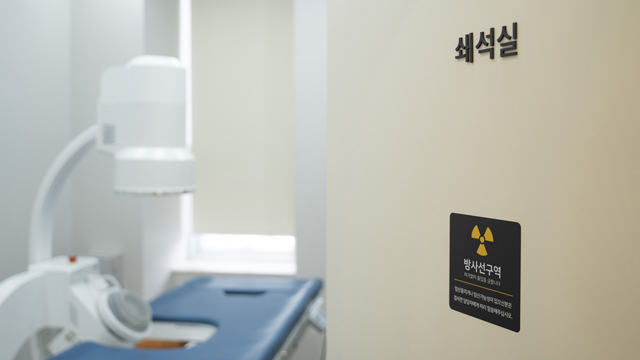
Shock Wave Lithotripsy (ESWL)
ESWL is a non-invasive treatment that uses focused shock waves delivered from outside the body to break a urinary stone into smaller fragments, allowing those fragments to pass through the urinary tract on their own.
Learn More
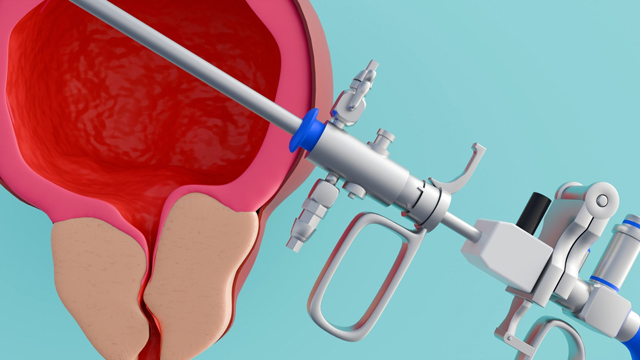
REZUM Water Vapor Therapy
REZUM Water Vapor Therapy is an FDA-cleared, minimally invasive procedure that delivers controlled water vapor directly into obstructive prostate tissue to relieve urinary symptoms caused by benign prostatic hyperplasia.
Learn More