Personalized Medical Care & Dedicated International Patient Concierge

Specialty Overview
Urinary Stone Treatment
Straight Urology Clinic provides personalized treatment for urinary and kidney stones, including ESWL and minimally invasive endoscopic stone removal, based on stone size, location, symptoms, and obstruction.
Schedule a ConsultationUrinary Stone Treatment

Medically reviewed by Donghyun Lee, MD, Board-Certified Urologist (Korea Ministry of Health and Welfare) Straight Urology Clinic, Seoul, South Korea | AUA & EAU Full Member
Urinary stone treatment refers to the diagnosis and management of stones that form when minerals and waste products in urine become concentrated and harden inside the kidneys, ureters, or bladder. Treatment is not one fixed procedure — it ranges from simple observation to non-invasive shock-wave therapy to endoscopic stone removal, and the right path depends on the stone's size, location, symptoms, and whether it is blocking urine flow. This page explains how urinary stones are evaluated and treated at Straight Urology Clinic in Seoul, and how the two active-treatment pathways — ESWL and endoscopic removal — compare.
What Is Urinary Stone Treatment?
Urinary stone treatment is the medical process of evaluating a stone in the urinary tract and selecting a management approach — observation, shock-wave therapy, or endoscopic removal — based on the stone's characteristics and the patient's symptoms. It exists because stones do not all behave the same way: some pass on their own, while others cause pain, infection, or obstruction that requires active intervention.
Stones form when minerals and waste products in urine become concentrated and harden within the urinary tract.
Treatment decisions are based on the stone's location, size, associated symptoms, likelihood of natural passage, presence of infection, and whether it is causing urinary obstruction.
Diagnostic evaluation typically includes a review of symptoms and imaging, such as ultrasound, IVP, or KUB studies, to confirm stone location and size.
Treatment options span a spectrum from observation for small, likely-to-pass stones to extracorporeal shock-wave lithotripsy (ESWL), ureteroscopic stone removal (URS), flexible renal endoscopy (RIRS), and percutaneous stone removal for larger or more complex stones.
According to the National Institute of Diabetes and Digestive and Kidney Diseases (NIDDK), about 11 percent of men and 6 percent of women in the United States develop a kidney stone at least once in their lifetime, which is one reason urinary stone care is a routinely requested urology service.
Who Performs Urinary Stone Treatment at Straight Urology Clinic

Dr. Donghyun Lee, MD
Board-certified Urologist
Urinary stone treatment at Straight Urology Clinic is performed by Dr. Donghyun Lee, MD, the clinic's Chief Director and sole treating urologist. Dr. Lee is a board-certified urologist certified by Korea's Ministry of Health and Welfare, and his procedure record includes more than 500 urinary stone surgeries within a broader career total of over 1,500 urological procedures and surgeries. His medical education includes graduating from Vanderbilt University in 2012 and from Korea University College of Medicine's Graduate School of Medicine in 2017, followed by doctoral coursework in urology at the same institution. He completed his urology residency at Korea University Guro Hospital from 2018 to 2022, and he later served as Chief of the Department of Urology at the Armed Forces Capital Hospital from 2022 to 2025, a period during which he also collaborated clinically with the Department of Urology at Seoul National University Hospital and Seoul St. Mary's Hospital. Dr. Lee is a full member of both the American Urological Association (AUA) and the European Association of Urology (EAU), in addition to being a regular member of the Korean Urological Association, the Korean Urological Oncology Society, and the Korean Society for Voiding Dysfunction and Incontinence, among other Korean urology societies. He presented at the EAU Annual Congress in Barcelona, Spain, in 2018. His stated approach is to listen to each patient's history and explain treatment options clearly before recommending a course of action, which he describes as "I believe the first step in care is listening. I take time to understand each patient before recommending treatment, and I explain every option clearly."
Urinary Stone Treatment Options Available
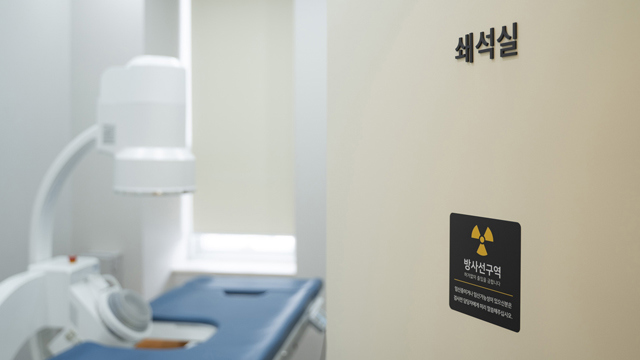
Straight Urology Clinic offers a range of stone-management pathways rather than a single fixed procedure, and the clinic describes its approach as a one-stop system covering consultation, testing, and treatment. Available options include:
Observation for select small stones considered likely to pass naturally, generally paired with monitoring and pain control.
Extracorporeal Shock Wave Lithotripsy (ESWL) — a non-invasive method that uses shock waves delivered from outside the body to fragment suitable stones so the pieces can pass naturally.
Ureteroscopic stone removal (URS) — a rigid ureteroscope is passed through the urinary tract to directly locate and treat a ureteral stone.
Flexible renal endoscopy (RIRS) — a flexible endoscope reaches kidney stones through the urinary tract without any skin incision.
Percutaneous stone removal (PCNL) — used for larger or more complex kidney stones, accessed through a small incision in the back.
Because ESWL and endoscopic removal are the two most commonly compared active-treatment pathways, the table below summarizes how they differ. Two dedicated pages on this site cover each in more depth: Shock Wave Lithotripsy (ESWL) and Endoscopic Stone Removal.
Factor | ESWL (Shock Wave Lithotripsy) | Endoscopic Stone Removal (URS / RIRS) |
|---|---|---|
How it works | Shock waves delivered from outside the body fragment the stone into smaller pieces | A ureteroscope is passed through the urethra and bladder to reach the stone directly |
Invasiveness | Non-invasive; no scope enters the urinary tract | Minimally invasive; a scope enters the urinary tract, but there is no external incision |
Anesthesia | Pain-control needs vary by patient and are confirmed during consultation | Generally performed under general or spinal anesthesia |
Best suited for | Stones considered appropriate for shock-wave treatment based on size and location | Stones unlikely to pass naturally, stones causing persistent pain or obstruction, or stones difficult to treat with ESWL |
How the stone is cleared | Fragmentation only; resulting fragments pass through the urinary tract afterward | Direct removal with a retrieval basket, or fragmentation with a laser (commonly Ho:YAG or thulium-fiber laser, per current EAU guidance) |
Possible additional step | More than one session may be needed depending on stone response | A temporary ureteral stent may be placed to support healing and drainage |
Typical setting | Outpatient procedure | Hospital-based procedure, typically with same-day or short-stay discharge |
The choice between these pathways — and whether observation or percutaneous removal is more appropriate instead — depends mainly on stone size, location, density, the presence of infection or obstruction, and whether a previous treatment attempt has already been tried, all of which are assessed during consultation with Dr. Lee.
Who Is a Good Candidate for Urinary Stone Treatment?
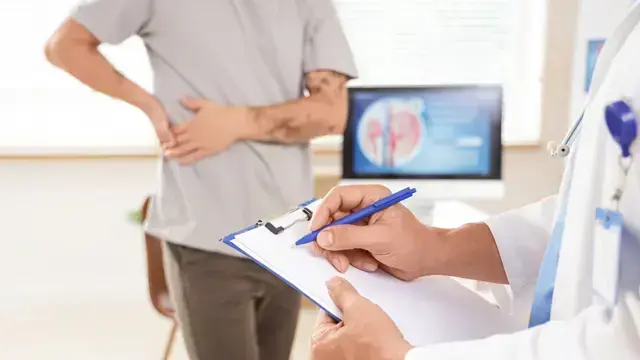
Patients with suspected or confirmed urinary stones who are experiencing sudden, severe flank or back pain.
Patients whose pain spreads to the lower abdomen or groin.
Patients who notice blood in the urine.
Patients experiencing painful urination or difficulty passing urine.
Patients with associated nausea or vomiting alongside stone symptoms.
Patients whose stone size, location, symptom pattern, infection status, and obstruction level indicate a need for active treatment rather than observation alone.
Patients being considered for ESWL specifically need a stone judged suitable for shock-wave treatment based on its size and location.
Patients being considered for endoscopic removal specifically often have a stone that is unlikely to pass on its own, is causing persistent pain or obstruction, or has proven difficult to treat with ESWL or conventional ureteroscopy.
Patients with an untreated urinary infection, uncontrolled bleeding problems, or pregnancy may not be appropriate candidates for ESWL until those issues are addressed.
Patients with an active infection or another medical condition that requires stabilization first may need treatment postponed or modified until that condition is managed.
Patients who can safely pass a small stone naturally, based on its size and location, may be better suited to observation than to an active procedure.
Final suitability for any pathway is determined only after an individual medical evaluation, since the appropriate treatment depends on the stone's size, location, symptoms, infection status, obstruction, and the patient's overall health.
What to Expect: Procedure, Recovery, and Results Timeline
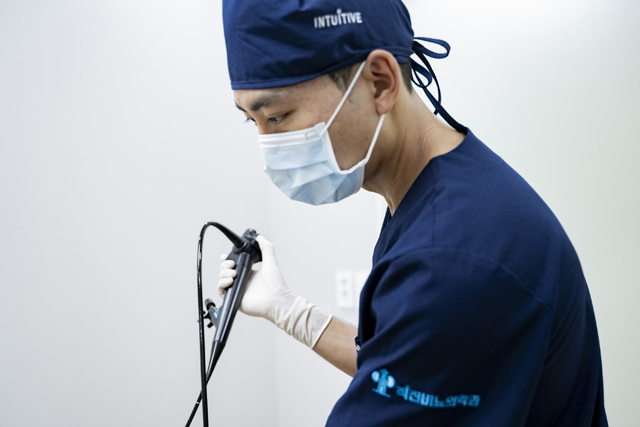
Evaluation begins with a review of symptoms and medical history. Imaging is used to confirm the stone's location and size. The treatment plan is then selected based on the stone's characteristics, the likelihood of natural passage, pain pattern, presence of infection, and whether hydronephrosis or urinary obstruction is present. Preparation before either pathway may include a review of current medications, imaging, and instructions about food and fluids specific to the planned procedure. For ESWL, the stone is targeted from outside the body and shock waves are delivered to fragment it into smaller pieces. For endoscopic removal, a ureteroscope is passed through the urethra and bladder to the stone, where it can be extracted with a basket or broken apart, commonly with a laser. Anesthesia and pain-control needs vary by the procedure chosen and are confirmed during consultation. After ESWL, patients may experience temporary pain, blood in the urine, bruising, or urinary discomfort as fragments pass, and hydration and prescribed medication are generally part of aftercare. After endoscopic removal, temporary urinary discomfort or blood in the urine can occur, particularly if a ureteral stent has been placed, and aftercare typically follows the urologist's instructions on medication, hydration, activity, and stent care or removal. Recovery time after ESWL is generally short, though the time needed for fragments to pass varies by stone size and individual factors. Recovery after endoscopic removal is also generally quick, but stent-related discomfort, if a stent is used, may persist for a short period until it is removed. Follow-up imaging may be used after either pathway to confirm whether the stone has cleared or whether fragments remain. For international patients traveling from the United States, the timing of return flights should be confirmed with the treating doctor based on recovery, symptoms, and treatment type, since sufficient recovery time before a long-haul flight is generally advised. Long-term prevention of future stones depends on identifying the individual's underlying risk factors, which is a separate evaluation from the initial treatment.
Stage | Observation | ESWL | Endoscopic Removal (URS/RIRS) |
|---|---|---|---|
Same day | Diagnosis and monitoring plan set | Stone fragmented; procedure completed | Stone removed or fragmented; possible stent placement |
First few days | Hydration and pain-control guidance | Fragments begin passing; mild discomfort possible | Stent-related discomfort possible, if placed |
1–2 weeks | Passage of stone monitored | Continued fragment passage; follow-up as advised | Recovery from procedure; stent removal scheduled if used |
Follow-up | Repeat imaging if stone has not passed | Imaging to confirm clearance or residual fragments | Imaging to confirm stone-free status |
These timeframes vary by individual case and are not guarantees; the treating physician confirms an individualized recovery and travel plan at consultation.
Safety, Precision, and Clinic Standards
Straight Urology Clinic is a Registered Medical Institution for Attracting Foreign Patients, certified by Korea's Ministry of Health and Welfare in compliance with the Medical Overseas Expansion and Foreign Patients Attraction Act. Dr. Donghyun Lee is a board-certified urologist under the same Ministry of Health and Welfare certification framework. He is also a full member of the American Urological Association (AUA), whose current guideline on the Surgical Management of Kidney and Ureteral Stones states that treatment selection should be guided by shared decision-making that accounts for patient goals, urinary tract anatomy, and stone characteristics. Dr. Lee is additionally a full member of the European Association of Urology (EAU), whose published Guidelines on Urolithiasis are updated on a defined annual schedule and reflect a systematic review of stone-treatment evidence. Current EAU guidance specifically recommends Ho:YAG or thulium-fiber laser lithotripsy for flexible ureteroscopy, a standard reflected in the clinic's approved technique description for endoscopic stone removal. The clinic's stated risk-reduction approach is to base treatment selection on the stone's location, size, symptom pattern, infection status, and degree of obstruction rather than defaulting to one method for every patient. This same evaluation process, covering consultation, testing, and treatment planning, is described by the clinic as a one-stop system intended to reduce the number of separate visits needed to reach a treatment decision. Possible risks are procedure-specific: ESWL risks can include infection, bleeding, blockage from passing fragments, or incomplete clearance requiring additional treatment, while endoscopic removal risks can include bleeding, infection, ureteral injury, or the need for a temporary ureteral stent. Any concerning symptoms after treatment — such as fever, severe pain, heavy bleeding, or inability to urinate — should prompt contact with the treating clinic or urgent local medical care.
The Bottom Line
Urinary stone treatment covers a range of approaches, from observation to ESWL to endoscopic removal, chosen according to the specific stone and patient.
Dr. Donghyun Lee, MD has performed more than 500 urinary stone surgeries and holds full membership in both the AUA and EAU.
ESWL is non-invasive and fragments stones from outside the body, while endoscopic removal directly accesses and treats the stone through the urinary tract.
Candidacy for any pathway depends on stone size, location, symptoms, infection status, and obstruction, confirmed only through individual consultation.
Recovery and results timelines vary by the pathway selected and by individual patient factors.
Frequently Asked Questions
Is a kidney or urinary stone always treated with surgery? No. Some small stones are appropriate for observation with hydration and pain control while they pass naturally. Whether surgery, ESWL, or observation is right for a given stone depends on its size, location, symptoms, and whether it is causing infection or obstruction, which is assessed during consultation.
What is the difference between ESWL and endoscopic stone removal? ESWL uses shock waves delivered from outside the body to fragment a stone so the pieces can pass on their own, while endoscopic removal uses a scope passed through the urinary tract to directly extract or break up the stone, commonly with a laser. The right choice depends on the stone's size, location, and how it responds to treatment.
Will I need anesthesia for urinary stone treatment? It depends on the procedure. Pain-control needs for ESWL vary by patient and are confirmed at consultation, while endoscopic stone removal is generally performed under general or spinal anesthesia so the procedure itself is not felt.
How soon can I expect the stone to be cleared? Timing depends on the treatment. Endoscopic removal can clear or fragment a stone immediately during the procedure, while ESWL fragments the stone so pieces can pass over the following days to weeks. Follow-up imaging may be used to confirm whether the stone has fully cleared.
Could I need more than one procedure? Possibly. ESWL sometimes requires more than one session depending on how the stone responds, and additional treatment can be needed if a stone is not completely cleared after either ESWL or endoscopic removal.
Will a stent be placed during treatment? A temporary ureteral stent is sometimes placed after endoscopic stone removal to support healing and urine drainage, and it is generally removed once recovery allows. Whether a stent is needed is determined case by case.
Can urinary stones come back after treatment? Future stone formation depends on an individual's underlying risk factors rather than the treatment method used. Addressing the cause of stone formation is a separate evaluation from treating the current stone.
Is English-language consultation available for this treatment? Yes, language support is available, and an online consultation option exists prior to an in-person visit at Straight Urology Clinic.
Book a Consultation at Straight Urology Clinic
If you are experiencing symptoms of a urinary stone or have been told you have one, Dr. Donghyun Lee, MD and the team at Straight Urology Clinic in Seoul can evaluate your stone and discuss which management pathway — observation, ESWL, or endoscopic removal — may be appropriate for your situation. To arrange a consultation, contact Straight Urology Clinic directly.
Disclaimer
This content is provided for general informational purposes only and is not medical advice. Treatment eligibility is determined only after an individual consultation and clinical evaluation by a qualified physician at Straight Urology Clinic. Treatment outcomes vary between patients.
Sources & Further Reading
Related Services
Procedures available within our clinical departments.
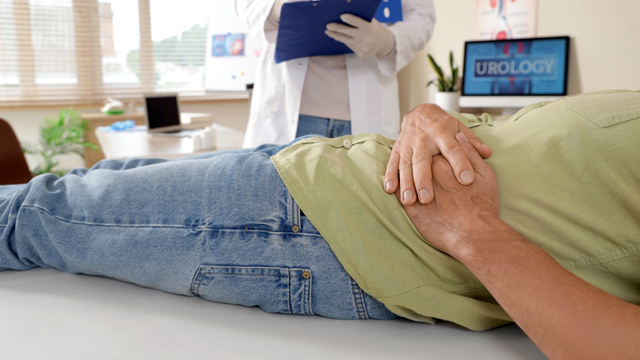
UroLift Prostatic Lift
UroLift Prostatic Lift is an FDA-cleared, minimally invasive procedure that uses small implants to retract and hold enlarged prostate tissue away from the urethra, improving urinary flow without removing prostate tissue.
Learn More
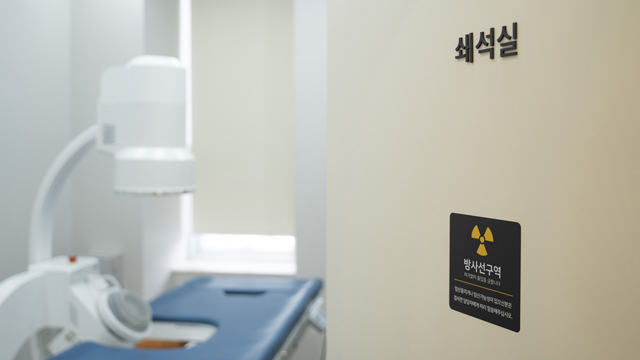
Shock Wave Lithotripsy (ESWL)
ESWL is a non-invasive treatment that uses focused shock waves delivered from outside the body to break a urinary stone into smaller fragments, allowing those fragments to pass through the urinary tract on their own.
Learn More
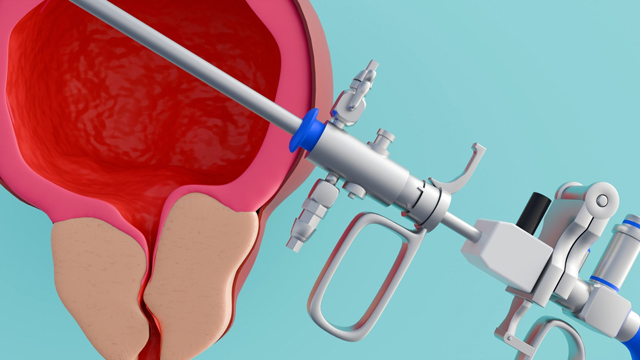
REZUM Water Vapor Therapy
REZUM Water Vapor Therapy is an FDA-cleared, minimally invasive procedure that delivers controlled water vapor directly into obstructive prostate tissue to relieve urinary symptoms caused by benign prostatic hyperplasia.
Learn More